
🏛️ Industrial Engineering & Governance
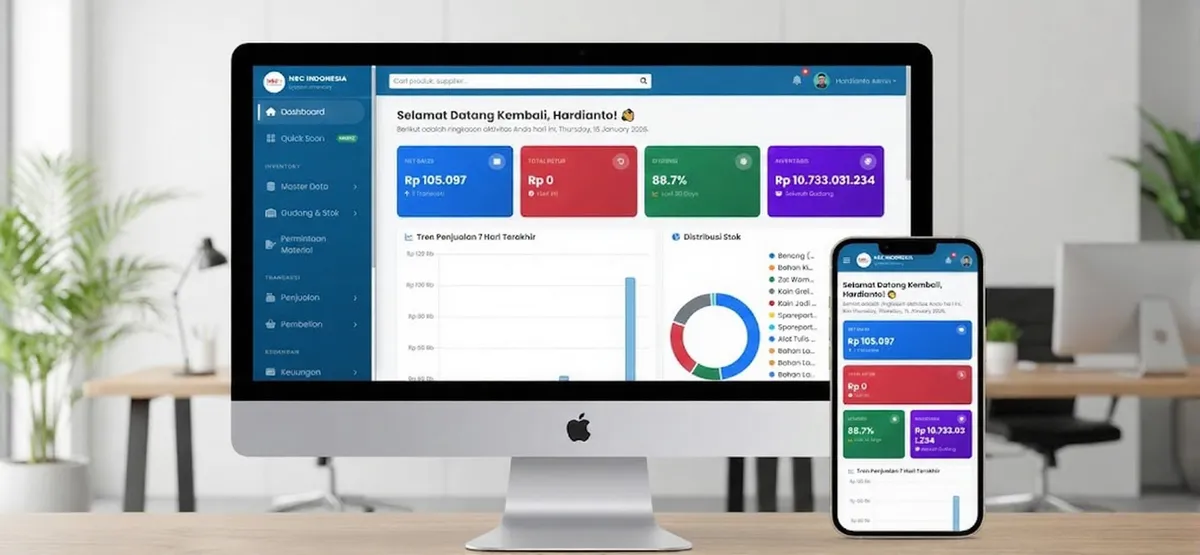
The PRIME ERP was developed to solve the “fragmented data” challenge in textile manufacturing. By replacing manual production logs with an Automated Manufacturing Ledger, the project established a “Single Source of Truth,” bridging the gap between the warehouse floor, the production line, and the executive finance department.
🎯 Quantifiable Operational Impact
- Precision Inventory Control: Successfully digitized 5,000+ unique fabric SKUs, implementing an ACID-compliant ledger that eliminated stock discrepancies and unauthorized material movement.
- Reconciliation Acceleration: Reduced the time required for monthly inventory audits by 45% through real-time stock valuation and automated transaction logging.
- Operational Error Mitigation: Integrated QR/Barcode validation logic within the dispatch and receiving modules, resulting in a significant reduction in human-entry errors on the factory floor.
- Financial Transparency: Developed an automated profit/loss reporting engine that provides stakeholders with instant visibility into manufacturing overhead and material waste.
✨ Core Enterprise Modules
📦 Multi-Echelon Warehouse Management
- Audit-Ready Stock Ledger: Every item movement is backed by a cryptographically unique audit trail, ensuring 100% traceability from raw yarn to finished fabric.
- Automated Reorder Intelligence: Implemented low-stock alert triggers to prevent production bottlenecks and optimize raw material procurement cycles.
- Geospatial Inventory: Real-time tracking across multiple physical warehouse locations with seamless inter-branch transfer logic.
🏭 Manufacturing & PPIC Orchestration
- Dynamic Bill of Materials (BOM): A sophisticated module for defining multi-stage component requirements for complex textile production.
- Auto-Deduction Engine: Real-time inventory depletion that automatically updates stock levels the moment a production batch is marked as complete in the Vue.js interface.
- Production Analytics: Interactive dashboards visualizing output efficiency and machine-level performance metrics.
💰 Industrial Finance & Sales
- Transactional Integrity: End-to-end management of Purchase Orders (PO) and Sales Invoices with automated accounts receivable/payable tracking.
- Valuation Reporting: Advanced reporting modules that generate PDF/Excel exports for inventory valuation, cost of goods sold (COGS), and department-level profit/loss.
🛠 Technology Stack
Backend (The Core Engine)
- Laravel 12: Utilizing the latest framework features, including advanced batch processing and optimized query caching for industrial datasets.
- PHP 8.4: Leveraging JIT compilation and property hooks for improved execution speed in complex financial calculations.
- Secure RBAC Architecture: Implementation of 8 distinct permission-based roles, ensuring that sensitive financial and production data is only accessible to authorized personnel.
Frontend (The Interaction Layer)
- Vue.js: Providing a reactive, high-performance user interface that allows factory staff to update production status without full-page reloads.
- Tailwind CSS: A utility-first framework used to build a professional, high-density interface optimized for rapid data entry and industrial environments.
- RESTful API Gateway: A hardened API layer designed to facilitate seamless communication between the reactive frontend and the enterprise backend.
🚀 Key Performance Results
- 45% Faster month-end financial and inventory closing.
- 100% Visibility into raw material consumption vs. finished goods output.
- Zero-Loss Data Integrity during high-concurrency production reporting periods.
- 5,000+ Active SKUs managed with real-time accuracy and zero stock discrepancies.