
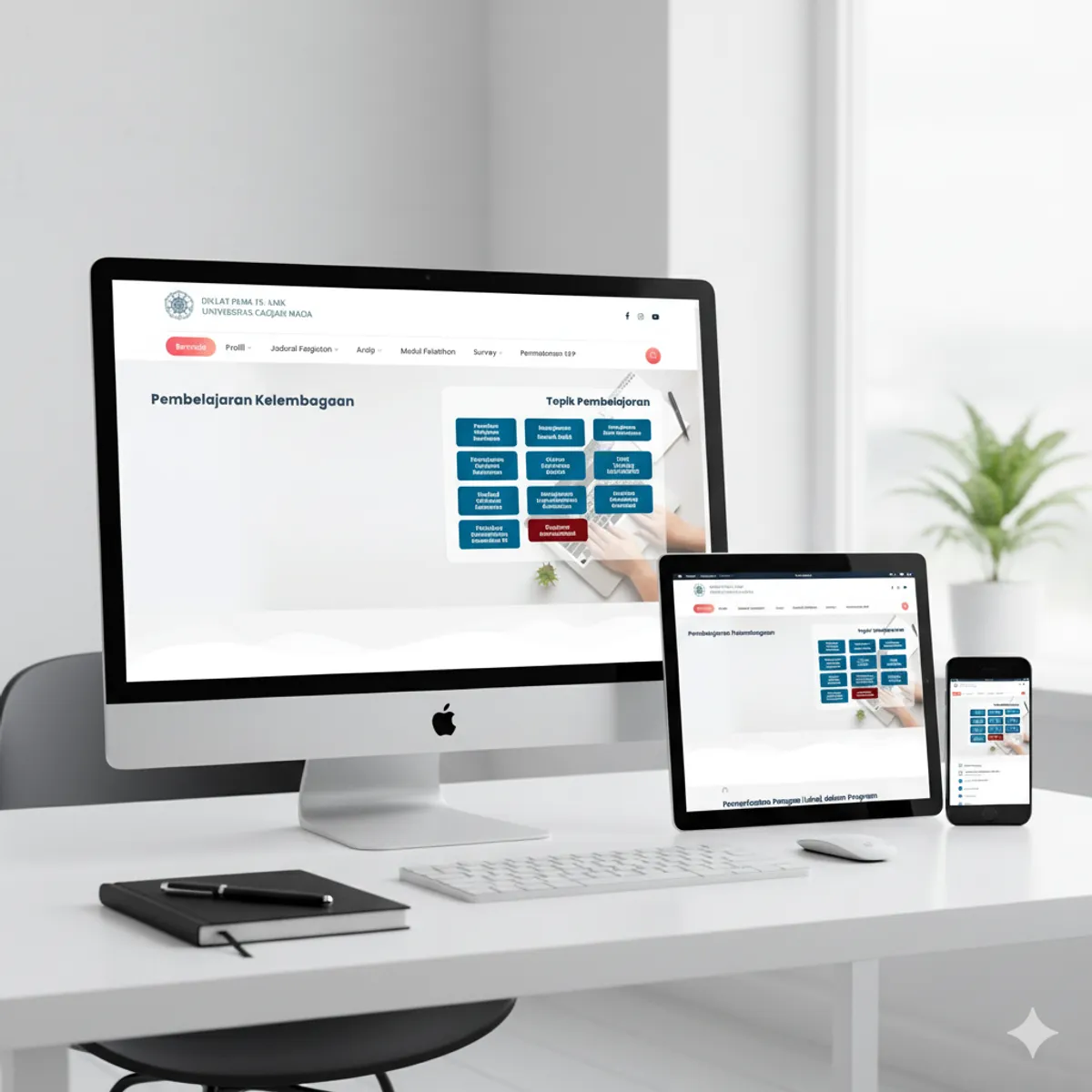
🏛 Institutional Engineering & Compliance
The DIKLAT PKMK Platform is designed to solve the challenge of high-stakes medical certification at scale. It functions as a secure, high-concurrency gateway for UGM’s capacity-building initiatives, ensuring that healthcare professionals can access accredited training without the latency or data-loss risks common in legacy LMS platforms.
🎯 Strategic Technical Impact
- Concurrent Load Management: Optimized database indexing and connection pooling to support 5,000+ simultaneous active learners, ensuring zero degradation in performance during peak examination periods.
- Accreditation Reliability: Engineered a fail-safe Automated Certification Engine that has processed thousands of digital credentials with a 100% accuracy rate, directly tied to academic progress validation.
- Optimized Learning Experience: Achieved a 40% reduction in Time-to-Interactive (TTI) by utilizing Next.js Server-Side Rendering (SSR) and edge-caching for resource-intensive medical modules.
- Integration Excellence: Developed a robust API layer for synchronization with the Plataran Sehat ecosystem, ensuring seamless data flow between institutional and national health databases.
✨ Core System Architecture
🛡 Identity & Progress Governance
- Granular RBAC (Role-Based Access Control): A sophisticated permission matrix managing access for students, medical facilitators, academic reviewers, and UGM administrators.
- Precision Progress Tracking: A real-time event-driven system that monitors learner engagement at the granular module level, providing instructors with high-fidelity behavioral analytics.
📑 Medical Pedagogy Infrastructure
- Secure Content Delivery: Specialized infrastructure for hosting and streaming high-definition medical training videos and encrypted PDF curriculum documents.
- Scalable Evaluation Engine: An automated assessment module capable of handling complex question banks with randomized delivery to ensure examination integrity.
🛠 Technology Stack
Frontend (The Presentation Layer)
- Next.js 14 (App Router): Leveraged for its advanced routing and the ability to serve static medical resources at the edge for global accessibility.
- TypeScript: Utilized for end-to-end type safety, significantly reducing production bugs in complex financial and academic logic.
- Tailwind CSS: A highly-optimized, mobile-first design system ensuring the platform is accessible to medical professionals in clinical settings.
Backend (The Service Layer)
- Node.js & Express.js: Providing a non-blocking, asynchronous backend capable of managing high-concurrency API requests.
- PostgreSQL: Chosen for its ACID compliance and ability to handle complex relational data associated with long-term academic transcripts.
- Redis: Integrated for session management and caching frequently accessed curriculum metadata, further reducing database overhead.
🚀 Key Performance Metrics
- 99.9% System Uptime: Maintained through a decoupled architecture and proactive server monitoring.
- Zero-Loss Data Integrity: Successful synchronization of 50,000+ learning records with institutional databases.
- 150+ Active Programs: Seamlessly managing diverse curricula ranging from clinical research to public health administration.